S-125 Pechora
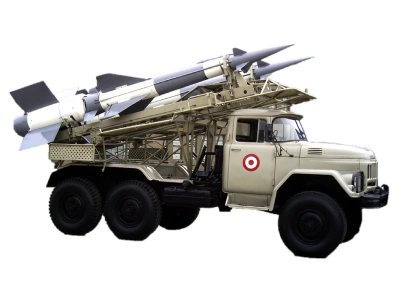
The S-125 is somewhat mobile, an improvement over the S-75 system. The missiles are typically deployed on fixed turrets containing two or four but can be carried ready-to-fire on ZIL trucks in pairs. Reloading the fixed launchers takes a few minutes.
Product details
The S-125 Neva/Pechora (Russian: С-125 "Нева"/"Печора", NATO reporting name SA-3 Goa) Soviet surface-to-air missile system was designed by Aleksei Isaev to complement the S-25 and S-75. It has a shorter effective range and lower engagement altitude than either of its predecessors and also flies slower, but due to its two-stage design it is more effective against more maneuverable targets. It is also able to engage lower flying targets than the previous systems, and being more modern it is much more resistant to ECM than the S-75. The 5V24 (V-600) missiles reach around Mach 3 to 3.5 in flight, both stages powered by solid fuel rocket motors. The S-125, like the S-75, uses radio command guidance. The naval version of this system has the NATO reporting name SA-N-1 Goa and original designation M-1 Volna (Russian Волна – wave).
| Note |
The technical characteristics may have minor differences according to the different manufacturers of the given product. The manufacturers reserve the right to make changes to the specified parameters. |
|---|
| Mass | 953 kg |
|---|---|
| Diameter | 375 mm |
| Warhead | Frag-HE |
| Warhead weight | 60 kg |
| Detonation mechanism | Proximity fuse |
| Wingspan | 2.2 m |
| Propellant | Solid propellant rocket motor |
| Operational range | 35 kilometres (22 mi) |
| Flight altitude | 18,000 metres (59,000 ft) |
| Guidance system | RF CLOS |
Related Tactical Choice
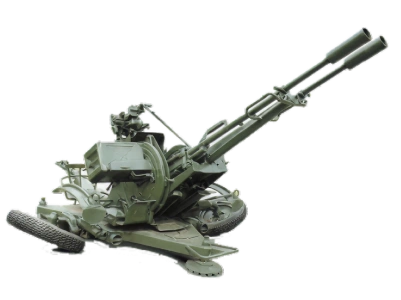
ZU-23-2
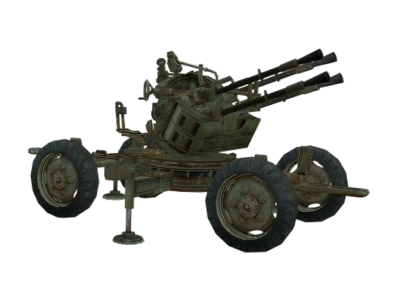
ZPU
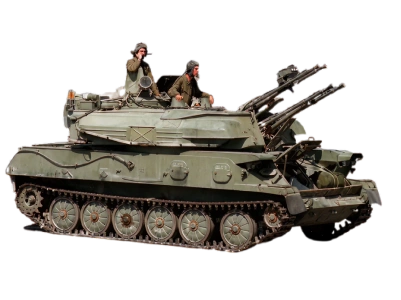
ZSU-23-4 SHILKA