MIG-29
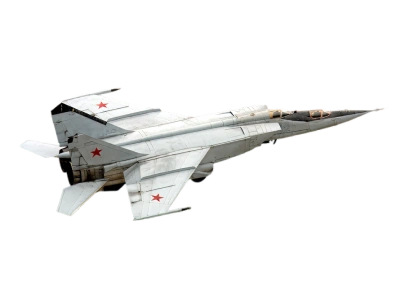
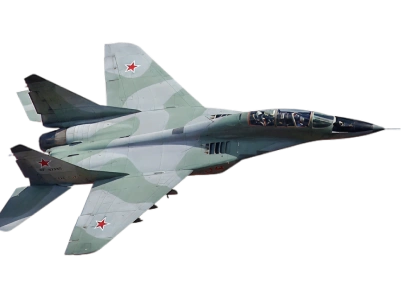
The Mikoyan MiG-29 is a twin-engine fighter aircraft designed in the Soviet Union. It was developed to counter new U.S. fighters such as the McDonnell Douglas F-15 Eagle and the General Dynamics F-16 Fighting Falcon.[2] The MiG-29 entered service with the Soviet Air Forces in 1982.
Product details
Sharing its origins in the original PFI requirements issued by TsAGI, the MiG-29 has broad aerodynamic similarities to the Sukhoi Su-27, however, there are some notable differences. The MiG-29 has a mid-mounted swept wing with blended leading-edge root extensions (LERXs) swept at around 40°; there are swept tailplanes and two vertical fins, mounted on booms outboard of the engines. Automatic slats are mounted on the leading edges of the wings; they are four-segment on early models and five-segment on some later variants. On the trailing edge, there are maneuvering flaps and wingtip ailerons.
The MiG-29 has hydraulic controls and a SAU-451 three-axis autopilot but, unlike the Su-27, no fly-by-wire control system. Nonetheless, it is very agile, with excellent instantaneous and sustained turn performance, high-alpha capability, and a general resistance to spins. The airframe consists primarily of aluminum with some composite materials,[specify] and is stressed for up to 9 g (88 m/s²) maneuvers. The controls have "soft" limiters to prevent the pilot from exceeding g and alpha limits, but the limiters can be disabled manually.
The technical characteristics may have minor differences according to the different manufacturers of the given product. The manufacturers reserve the right to make changes to the specified parameters.
Related Tactical Choice
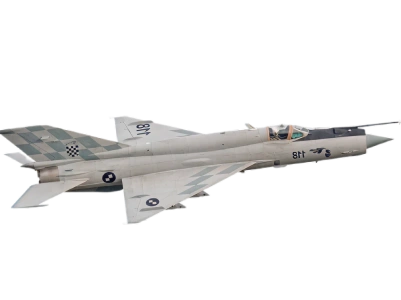
MIG-21
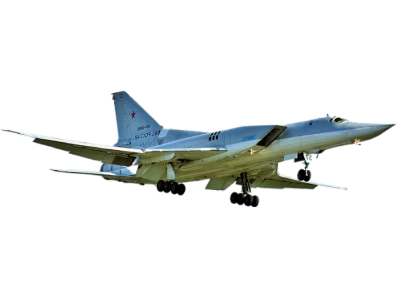
TU-22
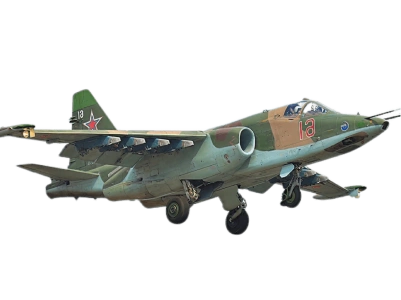
SU-25