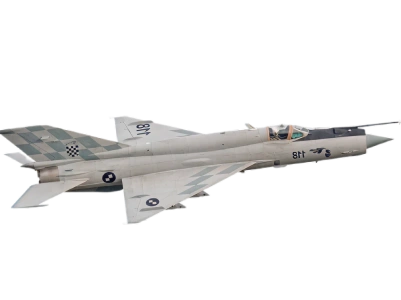
MIG-21
The Mikoyan-Gurevich MiG-21 is a supersonic jet fighter and interceptor aircraft, designed by the Mikoyan-Gurevich Design Bureau in the Soviet Union. Approximately 60 countries across four continents have flown the MiG-21, and it still serves many nations six decades after its maiden flight.
Product details
The MiG-21 was the first successful Soviet aircraft combining fighter and interceptor characteristics in a single aircraft. It was a lightweight fighter, achieving Mach 2 with a relatively low-powered afterburning turbojet, and is thus comparable to the American Lockheed F-104 Starfighter and Northrop F-5 Freedom Fighter and the French Dassault Mirage III. Its basic layout was used for numerous other Soviet designs; delta-winged aircraft included Su-9 interceptor and the fast E-150 prototype from MiG bureau while the mass-produced successful front fighter Su-7 and Mikoyan's I-75 experimental interceptor combined a similar fuselage shape with swept-back wings. However, the characteristic layout with the shock cone and front air intake did not see widespread use outside the USSR and finally proved to have limited development potential, mainly because of the very small space available for the radar.
The Mikoyan-Gurevich MiG-21 (Russian: Микоян и Гуревич МиГ-21; NATO reporting name: Fishbed) is a supersonic jet fighter and interceptor aircraft, designed by the Mikoyan-Gurevich Design Bureau in the Soviet Union. Its nicknames include: Balalaika because its planform resembles the stringed musical instrument of the same name; Ołówek, Polish for "pencil", due to the shape of its fuselage, and Én Bạc, meaning "Silver Swallow", in Vietnamese.
The technical characteristics may have minor differences according to the different manufacturers of the given product. The manufacturers reserve the right to make changes to the specified parameters.
Related Tactical Choice
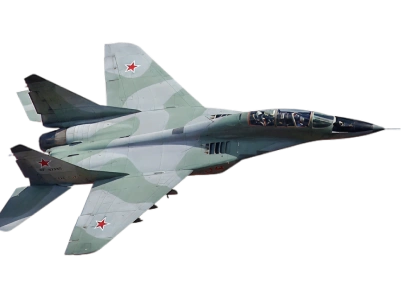
MIG-29
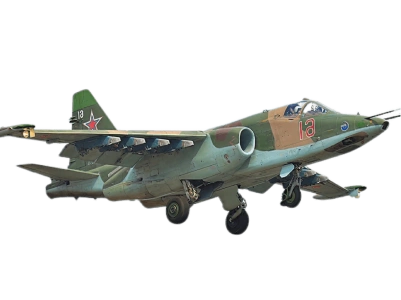
SU-25
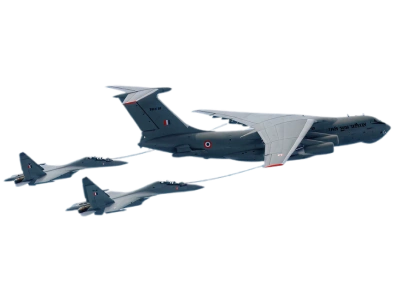
IL-78