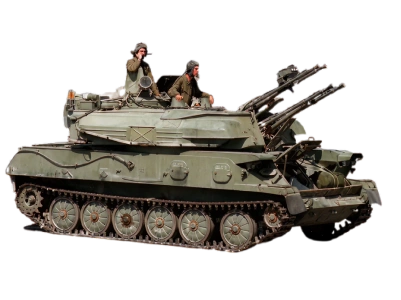
ZSU-23-4 SHILKA
The radar-guided ZSU-23-4 “Shilka” SPAAG, with its four 23 mm (0.90″) autocannons, was a revolutionary SPAAG, proving to be an extremely effective weapon against enemy attack aircraft and helicopters under every weather and light condition.
Product details
The ZSU-23-4 has a very high density, rate and accuracy of fire, as well as the capability for each of the four autocannons to fire its own type of projectile from separate belts. While it is technically possible that each cannon shoots different type of ammunition, there were two types commonly used in late 1970s: OFZT incendiary fragmentation and BZT armour-piercing tracer, which were to be loaded in 3:1 ratio—three OFZT, then one BZT, every 10th BZT round equipped with so-called "copper remover" and marked. Operators were strongly discouraged from shooting from a single barrel. The appearance of the "Shilka" caused significant changes in NATO tactics in aircraft use at low altitude over the battlefield. Despite its present obsolescence as a modern short-range anti-aircraft weapon, the ZSU-23-4 is still deadly for enemy light armoured vehicles, infantry and firing points as an infantry-support vehicle. With its high rate of accurate fire, the ZSU-23-4 can even neutralize tanks by destroying their gun sights, radio antennas, or other vulnerable parts. ZSU-23-4s, especially late models, have excellent performance and good systems reliability.
| Note |
The technical characteristics may have minor differences according to the different manufacturers of the given product. The manufacturers reserve the right to make changes to the specified parameters. |
|---|
| Mass | 19 tonnes |
|---|---|
| Width | 3.125 m (10 ft 3.0 in) |
| Armor | Welded steel, 9.2 mm (0.36 in) turret, up to 15 mm hull |
| Main armament | 4 × 23 mm 2A7 autocannons (AZP-23 "Amur" quad automatic anti-aircraft gun), ammunition 2,000 rounds |
| Engine | V-6R, 6-cylinder 4-stroke airless-injection water-cooled 20-litre diesel - 280 hp (209 kW) at 2,000 rpm |
| Power/weight | 14.7 hp/tonne (11.0 kW/tonne) |
| Suspension | Individual torsion bar |
| Ground clearance | 375 mm (14.8 in) |
| Fuel capacity | 515 l |
| Operational range | 450 km (road), 300 km (off-road) |
| Maximum speed | 50 km/h (31 mph) road or30 km/h (19 mph) off-road |
Related Tactical Choice
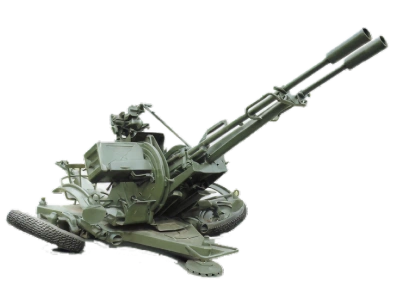
ZU-23-2
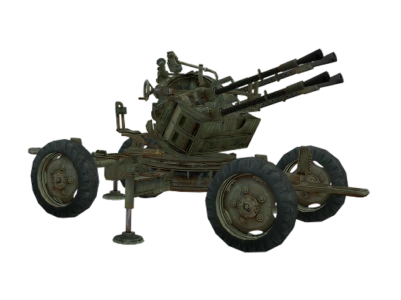
ZPU
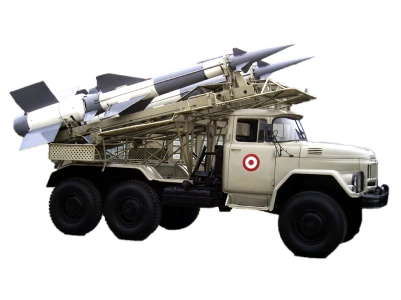
S-125 Pechora